

When physical or emotional distance starts growing between partners, it can feel isolating, even when you’re sharing the same space. Couples therapy for intimacy issues offers a structured path to reconnect, helping partners understand each other’s needs and rebuild the closeness that brought them together. Whether the disconnect stems from unresolved conflict, life transitions, or simply drifting apart over time, addressing these concerns early can prevent deeper rifts from forming.
At Reflective Therapy Center, we work with couples navigating these exact challenges. Our therapists focus on creating a safe, non-judgmental environment where both partners can express themselves openly and learn practical tools for daily connection. You don’t need to wait until your relationship is in crisis to seek support, working with a trained professional can strengthen your bond at any stage.
This article explores how therapy addresses both physical and emotional intimacy problems, what to expect from sessions, and actionable exercises you can start using right away. If you’ve been wondering whether professional support could help your relationship, you’ll find clear guidance here on your options and next steps.
Why intimacy issues happen in real relationships
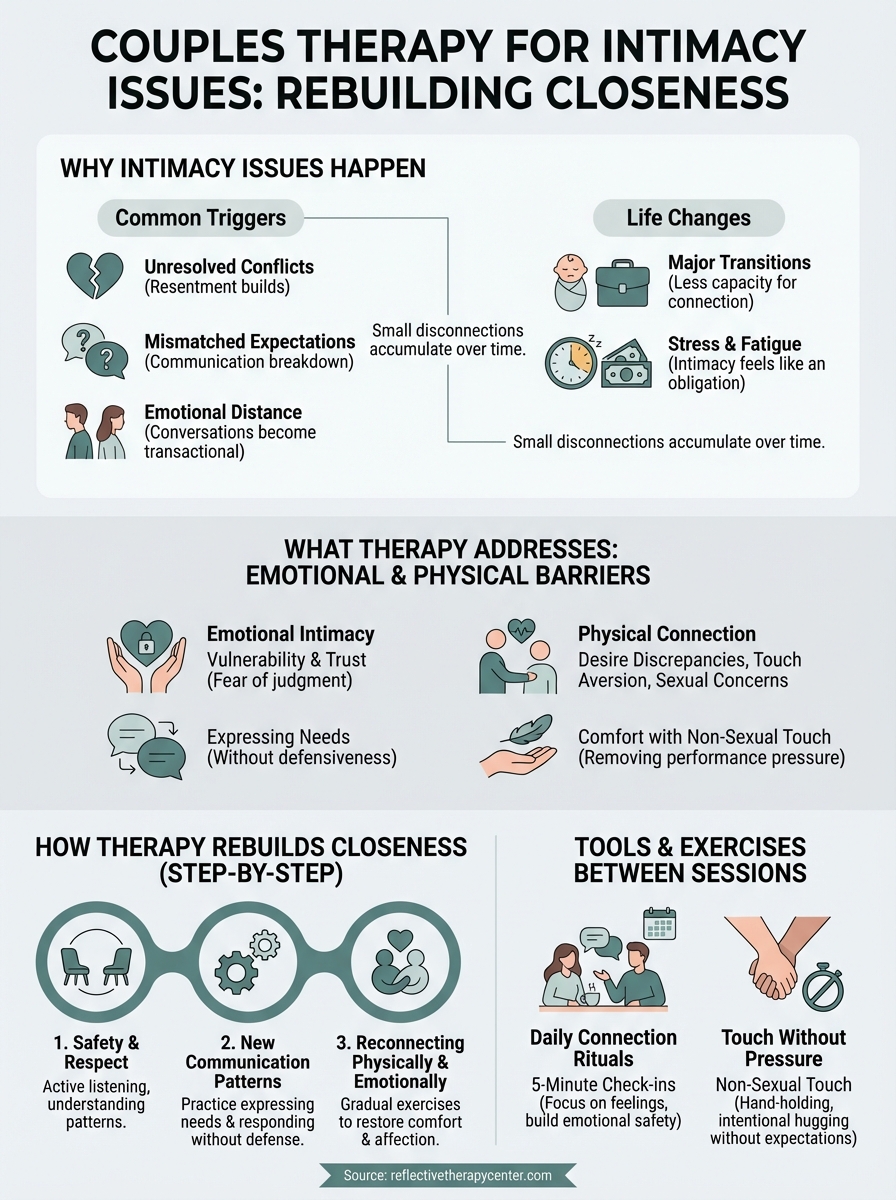
Intimacy problems rarely appear overnight. Small disconnections accumulate over weeks or months, creating emotional distance that feels harder to cross the longer it persists. You might notice this when conversations become transactional, focused only on schedules and logistics rather than deeper feelings or desires. Physical affection often declines alongside emotional closeness, leaving both partners feeling unseen or undervalued without fully understanding why.
Common triggers that create distance
Unresolved conflicts sit at the root of many intimacy problems. When you repeatedly avoid difficult conversations or sweep disagreements under the rug, resentment builds silently in the background. One partner might feel criticized or controlled, while the other feels ignored or dismissed. These patterns create protective walls that block vulnerability, making it nearly impossible to experience genuine closeness.

Mismatched expectations around sex, affection, or quality time also drive wedges between partners. You might assume your partner knows what you need, while they’re making completely different assumptions about your desires. Communication breakdowns like these leave both people feeling rejected or inadequate, even when the underlying issue is simply unclear expectations rather than lack of care.
Many couples wait years before seeking support, but addressing intimacy concerns early prevents small gaps from becoming unbridgeable divides.
How life changes affect connection
Major transitions like having children, changing careers, or caring for aging parents shift your relationship dynamics dramatically. Your energy and attention naturally flow toward these new demands, leaving less capacity for maintaining the connection you once prioritized. Sleep deprivation, financial stress, and schedule conflicts compound these challenges, making intimacy feel like one more obligation on an already overwhelming list.
Couples therapy for intimacy issues helps you identify which specific factors are affecting your relationship and provides concrete strategies for reconnecting despite life’s demands.
What couples therapy for intimacy issues addresses
Therapy sessions target both the visible symptoms and the underlying causes of intimacy problems. Your therapist will help you identify specific patterns that block connection, whether those involve communication breakdowns, unresolved resentments, or assumptions about what intimacy should look like. Rather than focusing solely on physical aspects, couples therapy for intimacy issues examines the entire relationship ecosystem that either supports or undermines closeness.
Emotional intimacy barriers
You’ll explore how vulnerability and trust function in your relationship. Many couples struggle with emotional intimacy because one or both partners fear judgment or rejection when sharing deeper feelings. Your therapist creates structured opportunities to practice expressing needs without defensiveness and listening without immediately problem-solving. These sessions often reveal that what you interpreted as disinterest was actually your partner’s fear of inadequacy or past hurt showing up in the present.
Learning to share emotional needs without fear of judgment often unlocks physical intimacy naturally.
Physical connection challenges
Therapists address desire discrepancies, touch aversion, or sexual concerns that create distance between partners. You’ll discuss how stress, medication, body image, or past experiences affect your physical relationship. Your therapist might assign specific exercises to rebuild comfort with non-sexual touch before addressing sexual intimacy, ensuring both partners feel safe and heard throughout the process.
How couples therapy rebuilds closeness step by step
Your therapist starts by establishing a foundation of safety and mutual respect during the first few sessions. Both partners share their perspectives without interruption, learning to listen actively rather than planning their response while the other speaks. This initial phase helps you recognize patterns you’ve fallen into and understand how each person’s actions affect the other, even when intentions were positive.
Creating new communication patterns
Sessions move toward rebuilding trust through consistent practice of healthier communication techniques. Your therapist guides you through exercises where you express needs clearly and respond to your partner’s concerns without becoming defensive. You’ll practice these skills in the therapy room first, receiving immediate feedback when old patterns resurface. This structured environment lets you experiment with vulnerability in a space that feels protected from the usual triggers at home.

Practicing new communication skills in therapy gives you confidence to use them during daily conflicts.
Reconnecting physically and emotionally
Couples therapy for intimacy issues gradually introduces exercises that rebuild both emotional and physical closeness. Your therapist might assign homework like scheduled check-ins or non-sexual touch exercises that remove performance pressure while restoring comfort with physical affection. These small, incremental steps help you rediscover each other without overwhelming anxiety about expectations.
Tools and exercises to try between sessions
Your therapist will suggest specific homework assignments that reinforce the skills you practice during sessions. These exercises help you build consistent connection habits rather than relying on occasional intense conversations to solve everything. Starting with small, manageable tasks increases your confidence and reduces the anxiety that often surrounds intimacy discussions. You’ll track what works and what doesn’t, giving your therapist concrete information to adjust your approach during your next appointment.
Daily connection rituals
Five-minute check-ins create predictable moments for emotional sharing without overwhelming your schedule. You ask each other one specific question about your day, focusing on feelings rather than just events. These brief conversations build emotional safety gradually, proving that vulnerability doesn’t always lead to conflict or dismissal. Your therapist might also assign gratitude exercises where you share one thing you appreciated about your partner each evening, shifting focus toward positive interactions.
Small daily practices create more lasting change than occasional grand gestures.
Touch without pressure
Non-sexual touch exercises help you rebuild physical comfort when sexual intimacy feels loaded with expectations. Your therapist might assign hand-holding during walks or intentional hugging for thirty seconds before leaving for work. These activities reconnect you with the pleasure of simple affection without performance anxiety about where touch needs to lead.
When to add sex therapy or medical support
Your therapist will recognize when intimacy challenges require specialized expertise beyond general couples counseling. Some concerns involve physical health conditions, sexual dysfunction, or deeply rooted trauma that benefit from professionals who focus specifically on these areas. Couples therapy for intimacy issues provides the foundation for connection, but adding targeted support addresses problems that standard talk therapy can’t fully resolve.
When specialized help makes sense
Sex therapists bring specific training in sexual health concerns like desire discrepancies, pain during intercourse, or performance anxiety that standard therapists might not address comprehensively. Your couples therapist might refer you when sexual problems persist despite improved communication and emotional connection. This specialized support complements your ongoing therapy rather than replacing it, giving you tools for both the relationship dynamics and the physical aspects of intimacy.
Adding specialized support doesn’t mean your couples therapy has failed; it means you’re accessing the right expertise for each challenge.
Physical health considerations
Medical factors like hormone imbalances, medication side effects, or chronic pain directly impact sexual intimacy. Your doctor can evaluate whether physical conditions need treatment before behavioral changes can take full effect. Many couples find that combining medical care with therapy produces better results than addressing either aspect alone.
A simple plan to move forward
Start by acknowledging that seeking help takes courage, and you’ve already taken an important step by learning about your options. Choose a therapist who specializes in couples therapy for intimacy issues rather than someone who offers general relationship counseling as one of many services. This specialized focus ensures your therapist understands the nuanced dynamics that affect both emotional and physical connection.
Schedule your first appointment within the next two weeks while motivation remains strong. You don’t need to resolve everything before your first session. Your therapist will help you identify priorities and create a realistic timeline for progress. Between now and your appointment, practice one small connection ritual from this article, like a five-minute check-in or intentional non-sexual touch.
Reflective Therapy Center provides specialized support for couples navigating intimacy challenges, with therapists trained in evidence-based approaches that rebuild closeness. Taking that first step often feels hardest, but you deserve a relationship where both partners feel seen, valued, and connected.