

Between exams, assignments, social pressures, and planning for the future, school can feel overwhelming. If you’re a student struggling to keep up, you’re not alone. Stress management for students has become one of the most searched topics online, and for good reason. Academic pressure affects mental health in ways that can spill over into every part of your life.
The good news? Stress doesn’t have to control you. With the right strategies, you can build habits that help you stay focused, balanced, and mentally healthy throughout your academic journey. These aren’t complicated wellness trends, they’re practical tools you can start using today.
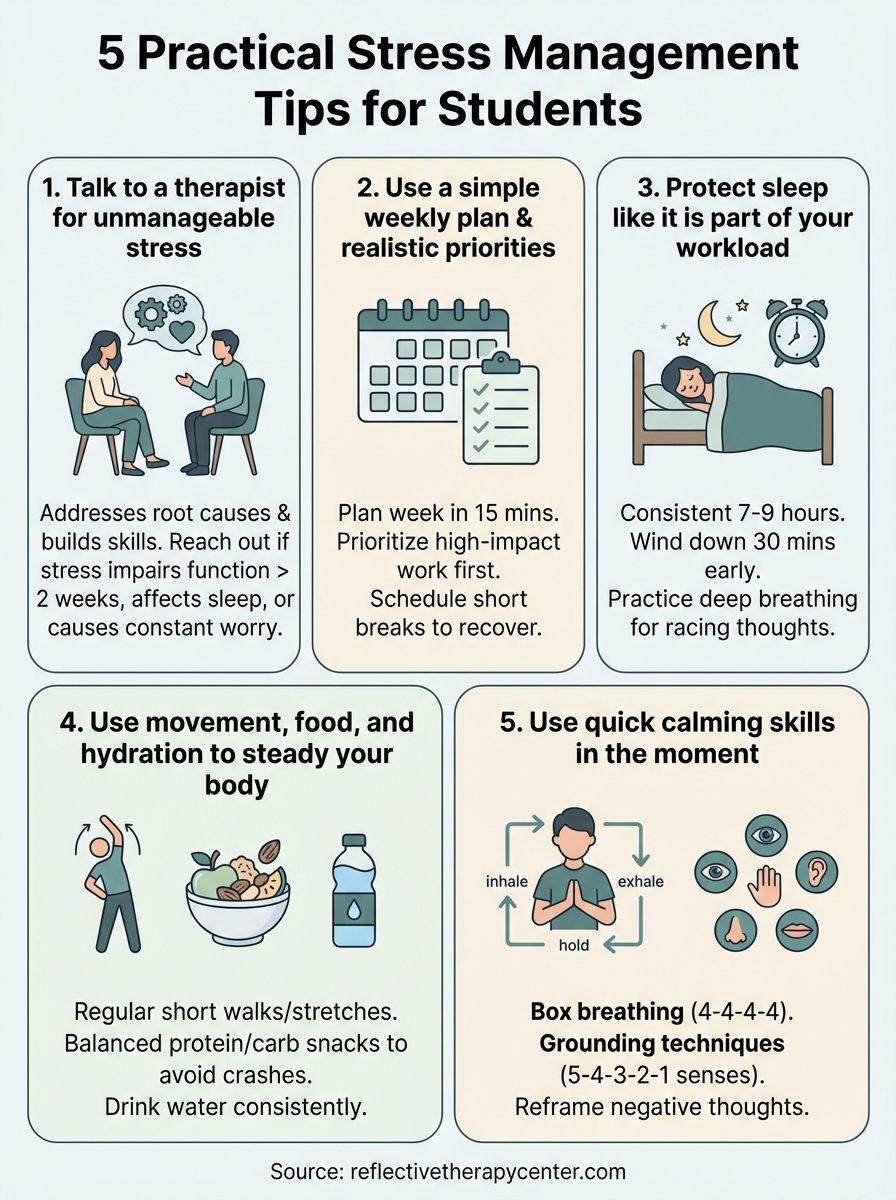
At Reflective Therapy Center, we work with students of all ages who are navigating exactly these challenges. This article shares five actionable tips drawn from therapeutic approaches that actually work. Whether you’re in high school or college, these strategies can help you take back control and feel more grounded when pressure builds.
1. Talk to a therapist when stress feels unmanageable
Sometimes the best stress management for students isn’t something you can do alone. When stress starts affecting your sleep, grades, or mental health, therapy offers a structured way to work through challenges with professional support. Many students wait too long to reach out, thinking they should handle everything independently. Working with a therapist gives you practical tools tailored to your situation and helps you build resilience before things spiral.
What therapy can help with for school stress
Therapy addresses the root causes of academic stress, not just the symptoms. A therapist can help you develop coping strategies for test anxiety, manage perfectionism, improve time management, and process feelings of inadequacy or burnout. You’ll learn specific techniques like cognitive reframing, mindfulness practices, and boundary-setting skills that apply directly to school challenges.
“Therapy isn’t about fixing what’s broken. It’s about building skills to navigate pressure in healthier ways.”
How to know it is time to reach out
Consider therapy if stress interferes with daily functioning for more than two weeks. Warning signs include constant worry, difficulty concentrating, changes in appetite or sleep, avoiding classes or social situations, and feeling hopeless about the future. Physical symptoms like headaches, chest tightness, or stomach problems that won’t go away also signal it’s time for support.
What to expect from a first session
Your initial session focuses on understanding your current challenges and what you want to improve. The therapist will ask about your school situation, support system, and symptoms you’re experiencing. This isn’t an interrogation. You’re building a collaborative relationship where you decide what to share and at what pace.
How to get the most from therapy between sessions
Apply what you learn during the week. Practice the techniques your therapist suggests, even when they feel awkward at first. Keep a simple journal tracking what works and what doesn’t. Be honest in sessions about what’s helping and what isn’t. Progress comes from consistent small efforts, not occasional breakthroughs.
2. Use a simple weekly plan and realistic priorities
Planning reduces stress by giving you control over your schedule instead of reacting to chaos. A good weekly plan doesn’t require complex apps or hours of setup. You need a system that actually fits your life and helps you decide what matters most when deadlines pile up. Effective stress management for students starts with knowing where your time goes and protecting space for recovery.

How to plan your week in 15 minutes
Set aside Sunday evening or Monday morning to map out your week. Write down all assignments, exams, and commitments with their actual deadlines. Block time for classes, study sessions, meals, and sleep. Leave buffer space between tasks because things always take longer than expected. Review your plan each morning and adjust as needed.
How to prioritize when everything feels urgent
Use a simple two-factor system: what’s due soonest and what carries the most weight for your grade. Focus on high-impact work first, then fill gaps with smaller tasks. If something truly can’t get done, communicate early with instructors rather than disappearing. Not everything deserves equal effort.
How to build breaks so you actually recover
Schedule short breaks between study blocks instead of powering through until you crash. A 10-minute walk or stretch does more for focus than scrolling social media. Plan one longer break each day for a meal with friends or an activity you enjoy. Recovery isn’t wasted time.
How to prevent last-minute panic before deadlines
Start assignments the day you receive them, even if you only spend 15 minutes reading instructions. Break larger projects into specific smaller tasks with mini-deadlines throughout the week. This approach lets you identify problems early when you still have time to ask questions or adjust your plan.
3. Protect sleep like it is part of your workload
Sleep deprivation amplifies stress in ways that affect everything from memory to emotional regulation. When you treat sleep as optional, you undermine every other stress management for students strategy you’re using. Your brain needs consistent rest to process information, manage emotions, and maintain focus during demanding school days. Protecting your sleep schedule isn’t self-indulgent. It’s foundational to academic performance.
Why sleep changes stress, focus, and mood
Inadequate sleep raises cortisol levels, your body’s primary stress hormone, making small problems feel overwhelming. You’ll notice decreased concentration, slower reaction times, and difficulty retaining information after just one poor night. Mood regulation suffers too, leaving you more irritable and less able to handle setbacks that wouldn’t normally derail you.
How to set a consistent sleep schedule on school days
Choose a wake time you can maintain on weekends to avoid disrupting your rhythm. Count back seven to nine hours to determine your target bedtime and start winding down 30 minutes earlier. Keep your room cool, dark, and quiet. Consistency matters more than perfection.
What to do when racing thoughts keep you awake
Keep a notebook by your bed to write down worries or tomorrow’s tasks so your brain can release them. Practice deep breathing by inhaling for four counts, holding for four, and exhaling for six. This activates your parasympathetic nervous system and signals safety to your body.
“Your brain doesn’t distinguish between a real threat and anxiety about tomorrow’s exam. Breathing techniques interrupt that stress response.”
How to reset after a bad night without spiraling
Accept that one rough night won’t ruin your performance if you don’t panic. Prioritize the most important tasks during your peak energy hours and postpone less urgent work. Take a 20-minute nap if possible, but avoid sleeping longer or you’ll feel worse. Return to your regular schedule that evening instead of trying to “catch up” in ways that throw off your rhythm.
4. Use movement, food, and hydration to steady your body
Your body and brain aren’t separate systems. Physical habits directly influence how well you handle pressure, and most stress management for students overlooks basic needs like movement, nutrition, and water intake. When you skip meals, sit for hours, or rely on energy drinks, you’re making stress harder to manage. Small changes to how you fuel and move your body create noticeable shifts in your capacity to focus and stay calm.

How stress shows up physically in students
Chronic stress triggers physical symptoms that many students mistake for separate health issues. You might experience tension headaches, tight shoulders, stomach problems, or unexplained fatigue that doesn’t improve with rest. These aren’t character flaws or signs of weakness. Your nervous system stays activated when demands feel relentless, and that activation produces real physical effects that interfere with daily functioning.
Easy movement options when you have no time or motivation
You don’t need gym memberships or hour-long workouts. Walking for 10 minutes between study sessions reduces cortisol and improves focus when you return to work. Stretching at your desk releases muscle tension and resets your posture. Take stairs instead of elevators when you can. The goal is regular movement throughout your day, not perfect exercise routines you’ll abandon.
“Movement doesn’t have to be exercise. It just needs to interrupt prolonged sitting and get your blood flowing.”
Food and caffeine choices that reduce crashes
Skip meals or rely heavily on caffeine, and you’ll experience energy crashes that compound stress. Eat protein with carbohydrates to maintain steady blood sugar throughout study sessions. Limit caffeine to morning hours so it doesn’t interfere with sleep. Keep simple snacks like nuts, fruit, or yogurt accessible instead of defaulting to vending machines when hunger hits between classes.
Small daily habits that support energy and mood
Drink water consistently rather than waiting until you’re thirsty, which signals you’re already dehydrated. Keep a reusable water bottle visible on your desk as a reminder. Step outside for natural light exposure during the day to regulate your circadian rhythm. These habits seem basic, but they create stability your nervous system needs to handle academic pressure without falling apart.
5. Use quick calming skills in the moment
Even with strong routines, stress hits in real time during presentations, difficult conversations, or when deadlines converge. Effective stress management for students includes tools you can deploy immediately without leaving the room or drawing attention. These techniques interrupt your nervous system’s stress response and help you regain focus when pressure spikes unexpectedly.
Fast breathing and grounding techniques you can use anywhere
Box breathing calms your nervous system in under two minutes. Breathe in for four counts, hold for four, exhale for four, and pause for four. Repeat until you feel steadier. Ground yourself by naming five things you see, four you can touch, three you hear, two you smell, and one you taste. This redirects your brain from panic to present awareness.
How to reframe perfectionism and negative self-talk
Challenge thoughts that predict catastrophe by asking if they’re actually true or just fear talking. Replace “I’ll fail” with “I’m doing what I can with the time I have.” Progress matters more than perfection. One imperfect assignment doesn’t define your worth or future.
How to set boundaries with social media and news
Turn off non-essential notifications during study blocks and before bed. Constant alerts keep your stress response activated. Limit news consumption to specific times instead of scrolling throughout the day. Information overload increases anxiety without improving your situation.
How to build a support network you actually use
Identify two or three people who understand what you’re dealing with and won’t minimize your stress. Reach out regularly, not just during crises. Join study groups or campus organizations where connection happens naturally around shared activities rather than forced vulnerability.
A calmer week starts with one change
You don’t need to overhaul your entire life to see improvement. Pick one strategy from this article and commit to it for the next week. Maybe that’s protecting seven hours of sleep, planning your Monday morning, or using box breathing before your next exam. Small consistent actions compound into real change over time.
Stress management for students works best when you treat it as a skill you’re building, not a problem you solve once and forget. Some weeks will go smoothly, and others will test every tool you have. That’s normal. What matters is that you keep returning to the practices that help you stay grounded when pressure builds.
If you’ve tried these strategies and still feel overwhelmed, or if stress is interfering with your ability to function, professional support makes a difference. At Reflective Therapy Center, we work with students facing academic pressure, anxiety, and the challenges that come with school life. You don’t have to figure this out alone.