
Why Children Struggle to Express Emotions in Words
When a child is struggling emotionally, most adults instinctively try to talk it through. We ask questions, try to understand what happened, and encourage them to explain how they feel. But children often do not have the language, emotional awareness, or sense of safety required to express complex inner experiences verbally. A child may feel overwhelmed by anxiety, confused by a major life change, or affected by something distressing, yet still be unable to clearly explain it.
Instead of talking, children communicate through behavior. That might look like tantrums, withdrawal, clinginess, irritability, or sudden changes in mood. These reactions are not random—they are signals. The challenge is that without the right tools, both children and parents can feel stuck trying to decode what those signals mean. This is where play therapy becomes incredibly powerful, because it meets children at their natural level of communication rather than expecting them to function like adults.
What Is Play Therapy and How Does It Work?
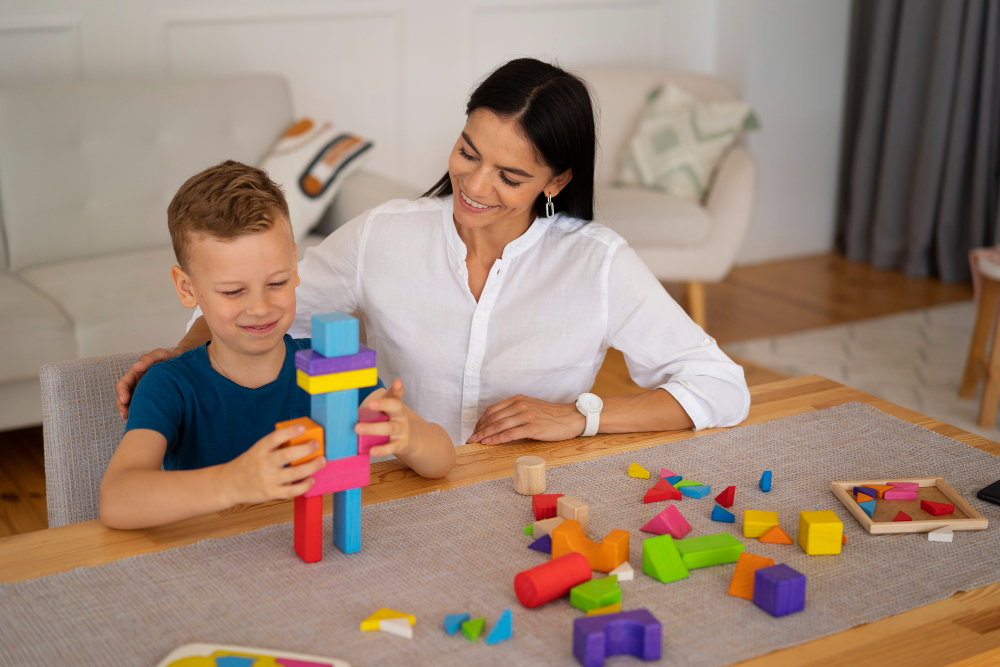
Play therapy is a specialized, evidence-based approach designed to help children express thoughts and emotions through play rather than relying solely on words. Instead of sitting face-to-face in a traditional talk therapy format, children engage with toys, art materials, games, storytelling, and imaginative play while a trained therapist guides the process with intention.
To an outside observer, it may look like simple play, but there is structured clinical work happening beneath the surface. Therapists are carefully observing patterns, emotional themes, reactions, and behaviors. They reflect feelings, build trust, and help the child process experiences in a way that feels safe and manageable. Over time, this allows children to make sense of their inner world, develop emotional awareness, and build healthier coping strategies.
The key difference is that play therapy does not force expression—it allows it to emerge naturally. Children begin to open up not because they are pressured to talk, but because they feel understood.
How Play Therapy Helps Children with Anxiety
Anxiety in children does not always look like worry in the way adults expect. It often shows up as avoidance, irritability, difficulty separating from parents, trouble sleeping, or intense emotional reactions to everyday situations. Some children become perfectionistic, while others appear restless or easily overwhelmed.
Through play therapy, children can safely explore their fears without feeling exposed or judged. They might use dolls, drawings, or pretend scenarios to represent situations that make them anxious. A therapist can then gently guide the child toward understanding those fears and building coping strategies, such as emotional regulation, problem-solving, and self-soothing techniques.
Because the process feels natural and engaging, children are more willing to participate. Instead of being told to “calm down,” they learn how to actually manage their emotions in a way that sticks.
How Play Therapy Supports Trauma Healing
Trauma in children is often misunderstood. It does not always come from a single major event. It can include experiences like family conflict, loss, bullying, medical issues, or anything that leaves a child feeling unsafe or overwhelmed. After trauma, children may act out, shut down, become more fearful, or struggle with trust and emotional regulation.
One of the biggest challenges with trauma is that children may not be able to talk about what happened, even if they want to. In some cases, they may not fully understand it themselves. Play therapy provides a safer pathway for processing these experiences. Instead of requiring direct verbal discussion, children can express and work through trauma symbolically through play.
This allows healing to happen at the child’s pace. The therapist creates a secure environment where the child gradually builds a sense of safety, processes difficult emotions, and learns how to regulate their responses. Over time, the intensity of trauma-related reactions often decreases, and the child begins to feel more in control.
Understanding Behavioral Challenges Through a Different Lens
Many parents seek help because of behavioral issues—tantrums, defiance, aggression, impulsivity, or emotional outbursts. It is easy to focus on stopping the behavior, especially when it is disruptive or stressful for the family. However, behavior is often a form of communication, especially in children who lack the tools to express what they are feeling internally.
Play therapy shifts the focus from “How do we stop this behavior?” to “What is this behavior trying to tell us?” A child who appears defiant may actually be anxious or overwhelmed. A child who is aggressive may be struggling with frustration or unmet emotional needs. A child who shuts down may feel unsafe or misunderstood.
By addressing the underlying cause rather than just the symptom, play therapy helps create more meaningful and lasting change. As children develop emotional awareness and coping skills, behavior often improves naturally because the root issue is being addressed.
What Happens During a Play Therapy Session?
A typical play therapy session is designed to feel safe, engaging, and structured without being rigid. The child is introduced to a space filled with carefully selected toys and materials that encourage expression. These might include figurines, dolls, art supplies, sensory tools, and role-playing items.
The therapist follows the child’s lead while also guiding the process in subtle but intentional ways. They may reflect what the child is expressing, introduce themes, or help the child connect emotions to experiences. Some sessions are more child-led, while others may include structured activities focused on specific skills like emotional regulation or coping strategies.
For older children and teens, sessions may include a mix of play, conversation, and practical tools. The approach evolves based on the child’s age, needs, and goals, ensuring that therapy remains both effective and appropriate.
The Role of Parents in the Healing Process
One of the most important aspects of play therapy is that it does not happen in isolation. Parents play a crucial role in supporting their child’s progress. Therapists often provide guidance, feedback, and strategies that parents can use at home to reinforce what the child is learning in sessions.
This might include helping parents understand behavior more accurately, respond with more effective emotional support, and create a more predictable and secure environment. When parents shift how they respond, children often feel safer and more understood, which accelerates progress.
In some cases, family sessions may also be included to improve communication, strengthen relationships, and address dynamics that may be contributing to the child’s challenges.
Signs Your Child May Benefit from Play Therapy
Parents often wonder when it is the right time to seek support. While every child is different, there are some common signs that may indicate a need for help. These include frequent anxiety, emotional outbursts, aggression, withdrawal, difficulty at school, sleep issues, regression, or noticeable changes after a stressful or upsetting event.
A child does not need to be in crisis to benefit from therapy. In fact, early support can make a significant difference by helping children develop healthy emotional skills before challenges become more deeply ingrled.
Why Play Therapy Creates Lasting Change
Play therapy works because it respects how children naturally process the world. Instead of forcing them into adult-style conversations, it uses their language—play—to help them express, understand, and regulate their emotions.
Over time, children build skills that extend far beyond the therapy room. They become more aware of their feelings, better able to manage stress, more confident in expressing themselves, and more connected in their relationships. These changes may start small, but they often lead to meaningful, long-term growth.
For parents, the biggest shift is often a deeper understanding of their child. What once felt confusing or frustrating begins to make sense. And with that understanding comes the ability to respond in ways that truly support healing.
A Safe Space for Children to Be Understood
At the heart of play therapy is something simple but powerful: children need a space where they feel safe, understood, and accepted. When that space is combined with clinical expertise and a thoughtful approach, real change becomes possible.
Children do not need perfect words to begin healing. They need connection, support, and the freedom to express themselves in a way that feels natural to them. Play therapy offers exactly that—helping children move from confusion and overwhelm toward clarity, confidence, and emotional well-being.