

Stress hits without warning. Your heart races during a meeting, your shoulders tense in traffic, or your mind spirals before sleep. In those moments, breathing exercises for stress can be your most accessible tool, no app, no equipment, just you and your breath.
These techniques work because they activate your body’s natural relaxation response, signaling your nervous system to shift from fight-or-flight mode into a calmer state. Research shows that controlled breathing can lower cortisol levels and reduce physical symptoms of anxiety within minutes.
At Reflective Therapy Center, we regularly teach these methods to clients as part of building emotional resilience and managing daily stressors. Whether you’re dealing with work pressure, relationship tension, or general anxiety, these five evidence-based exercises give you practical ways to regain control, anywhere, anytime.
1. Diaphragmatic breathing
Diaphragmatic breathing, often called belly breathing, is one of the most effective breathing exercises for stress because it engages your body’s primary breathing muscle. Unlike shallow chest breathing that keeps you in a heightened state, this technique calms your nervous system by stimulating the vagus nerve, which tells your body it’s safe to relax.
What it does in your body
When you breathe deeply into your diaphragm, you increase oxygen exchange and activate your parasympathetic nervous system, the part responsible for rest and recovery. Your heart rate slows, blood pressure drops, and stress hormones decrease as your body shifts out of its defensive mode into a state of balance.
How to do it step by step
Place one hand on your chest and the other on your belly. Breathe in slowly through your nose for four counts, letting your stomach rise while your chest stays relatively still. Exhale through your mouth for six counts, feeling your belly fall. The hand on your abdomen should move more than the one on your chest, confirming you’re breathing deeply enough to engage your diaphragm.
When to use it
You can practice this technique before stressful events like presentations or difficult conversations, or use it during moments of overwhelm when you notice tension building. Regular practice, even just five minutes daily, helps retrain your default breathing pattern to be naturally deeper and more calming.
Consistent diaphragmatic breathing creates a foundation for managing stress before it escalates into physical symptoms.
Common mistakes and quick fixes
Many people force the breath or breathe too quickly, which creates more tension. If you feel lightheaded, slow your pace and take smaller breaths. Your belly should expand naturally, not through forced pushing. Think of filling a balloon gently rather than inflating it under pressure.
Modifications for tight chest or shallow breathing
Start with shorter breath counts if a four-count inhale feels difficult. Try breathing in for two counts and out for three, then gradually extend as your capacity increases. You can also practice lying flat with a light book on your belly, watching it rise and fall to build awareness without strain.
When to get extra support from a therapist
If breathing exercises consistently trigger panic or you struggle to control your breath despite practice, working with a therapist can help. At Reflective Therapy Center, we teach these techniques alongside other coping strategies tailored to your specific stress patterns and underlying concerns.
2. Box breathing
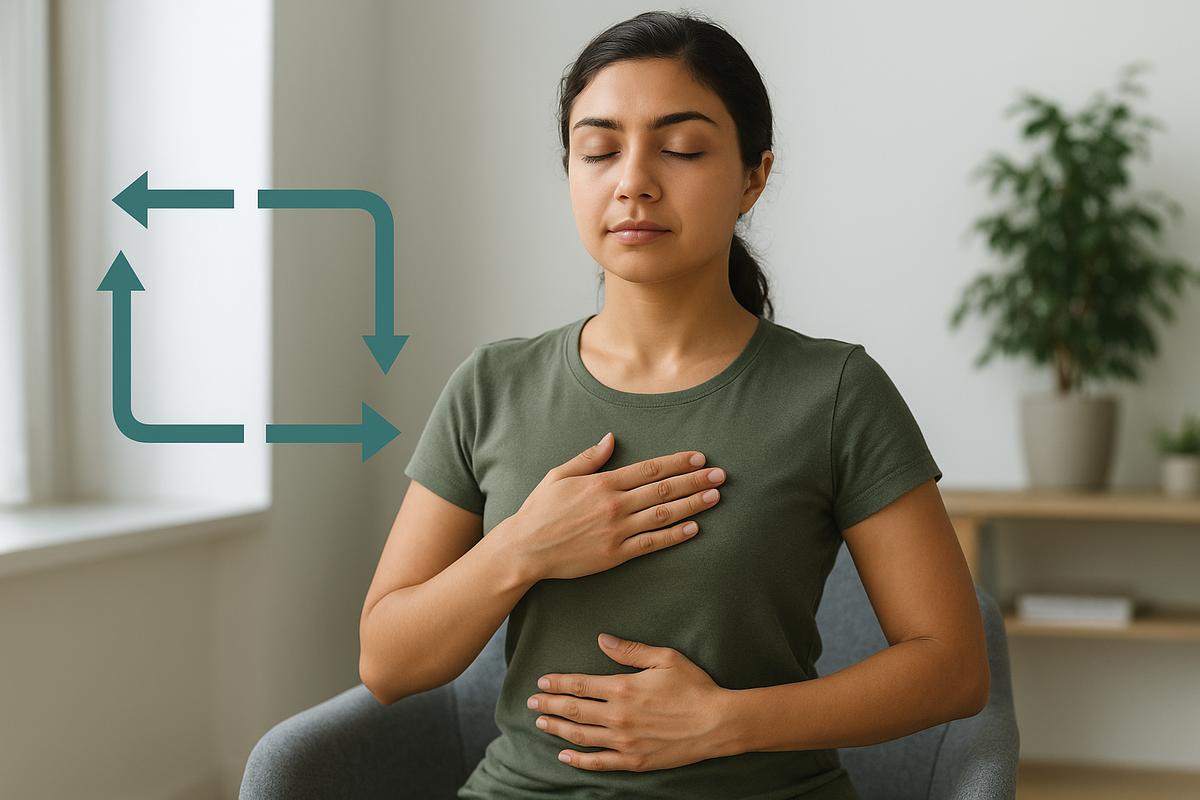
Box breathing uses equal counts for each phase of your breath, creating a structured rhythm that helps reset your nervous system. This technique, also used by athletes and military personnel, gives your mind a simple pattern to follow when stress makes concentration difficult.
What it does in your body
The equal timing between inhaling, holding, exhaling, and pausing creates predictable intervals that calm racing thoughts and reduce physical tension. Your body responds by lowering stress hormones and bringing oxygen levels into balance.
How to do it step by step
Breathe in through your nose for four counts, hold your breath for four counts, exhale through your mouth for four counts, then pause with empty lungs for four counts. Repeat this cycle four to six times, visualizing a box as you move through each side.
Box breathing gives your mind something concrete to focus on, interrupting the spiral of anxious thoughts.
When to use it
This method works well before high-pressure situations or when you need to regain mental clarity quickly. You can practice it sitting at your desk, in your car, or anywhere you have a few minutes of privacy.
Common mistakes and quick fixes
Rushing through the counts defeats the purpose. Use a mental count or watch a clock to maintain consistent timing. Your breath should feel controlled but not strained.
Modifications if breath holds feel uncomfortable
Start with three-count intervals if four feels too long. You can also shorten just the holds while keeping inhales and exhales at four counts until your capacity increases.
When to avoid or shorten the holds
Skip or reduce the breath holds if you have respiratory conditions or feel dizzy during practice. Some people do better with shorter holds of one or two counts.
3. 4-7-8 breathing
The 4-7-8 technique uses unequal breath ratios to create a sedative effect on your nervous system. This method works faster than many other breathing exercises for stress because the extended hold and longer exhale force your body into relaxation.
What it does in your body
The pattern reduces cortisol and triggers your parasympathetic response more aggressively than balanced breathing. Your heart rate drops quickly as the prolonged exhale removes excess carbon dioxide.
How to do it step by step
Place your tongue behind your upper front teeth. Exhale completely through your mouth, then inhale quietly through your nose for four counts. Hold your breath for seven counts, then exhale through your mouth for eight counts. Repeat for four cycles.
When to use it
Use this technique before sleep or when anxiety feels overwhelming. The timing creates enough physiological change to interrupt panic responses.
Common mistakes and quick fixes
Rushing the counts or breathing too shallowly prevents the full effect. Maintain consistent speed throughout all phases.
Modifications for beginners
Cut all counts in half: inhale for two, hold for 3.5, exhale for four. Keep the same ratios while building capacity gradually.
The 4-7-8 pattern works quickly because it forces a physiological shift your body cannot ignore.
Safety notes for dizziness and over-breathing
Stop immediately if you feel lightheaded or dizzy. Start with just two cycles until your body adapts, and never practice while driving.
4. Extended exhale breathing
Extended exhale breathing focuses on making your out-breath longer than your in-breath, which directly activates your body’s calming response. This simple adjustment shifts your nervous system away from stress faster than balanced breathing patterns.
What it does in your body
The longer exhale stimulates your vagus nerve and increases parasympathetic activity, signaling safety to your brain. Your heart rate slows and muscle tension decreases as carbon dioxide levels normalize.
How to do it step by step
Breathe in through your nose for three counts, then exhale through your mouth for six counts. Keep the exhale smooth and controlled rather than forced. Repeat for five to ten cycles, adjusting the ratio as needed.
When to use it
Practice this technique when you notice physical tension building or your mind racing. It works well during transitions between tasks or when you need quick relief without drawing attention.
Common mistakes and quick fixes
Forcing the exhale creates strain. Let your breath flow naturally while extending the duration gently. Your exhale should feel like a slow deflation rather than a push.
Simple pacing options you can remember
Try a 2-to-4 count if you’re new to breathing exercises for stress, or extend to 4-to-8 as your capacity grows. The key is keeping your exhale twice as long as your inhale.
Doubling your exhale length sends immediate signals to your nervous system that it’s time to stand down.
Modifications for asthma or breathing sensitivity
Shorten both phases if extended exhales trigger discomfort. Use a 2-to-3 ratio instead, maintaining gentle control without restriction.
5. Physiological sigh
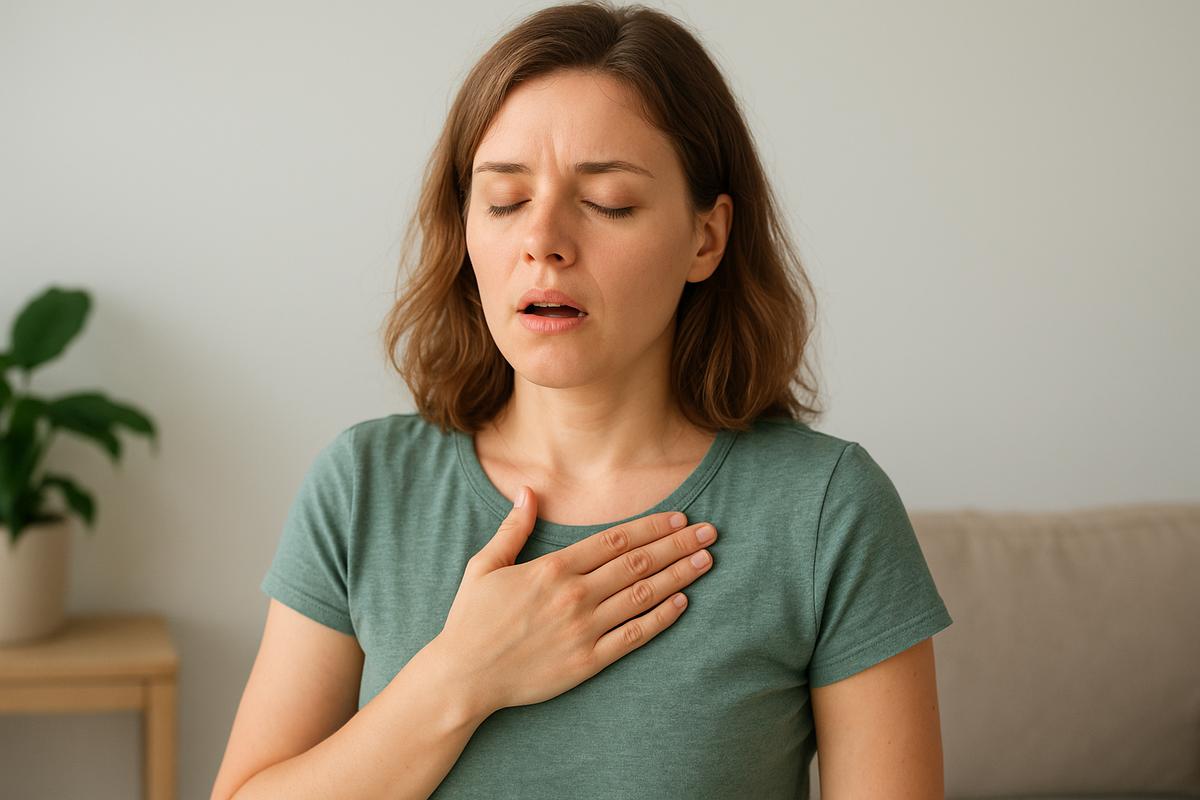
The physiological sigh is a natural stress-release mechanism your body already uses without thinking. You’ve done it automatically after crying or during moments of relief. Turning this involuntary response into a deliberate tool gives you one of the fastest breathing exercises for stress relief available.
What it does in your body
This technique uses two quick inhales followed by a long exhale to rapidly expel carbon dioxide and restore oxygen balance. Your nervous system responds by lowering cortisol and releasing physical tension within seconds.
How to do it step by step
Breathe in through your nose until your lungs feel about three-quarters full, then take a second quick inhale to top off your lungs completely. Exhale slowly through your mouth for as long as comfortable. Repeat two to three times for immediate relief.
When to use it
Use this method when you need instant calming during acute stress moments. It works particularly well after receiving difficult news or when tension spikes suddenly.
Common mistakes and quick fixes
Skipping the double inhale reduces effectiveness. Make sure you take that second quick breath before the long exhale to activate the full response.
How to pair it with a calming phrase or cue
Combine the exhale with a mental cue like “release” or “let go” to strengthen the stress-relief association. Your brain will link the phrase with relaxation over time.
Pairing physical techniques with mental cues creates a more powerful and memorable stress response tool.
When to stop and switch techniques
Stop if you feel dizzy or breathless after multiple rounds. Switch to extended exhale breathing if you need continued support without the intensity.
Next steps
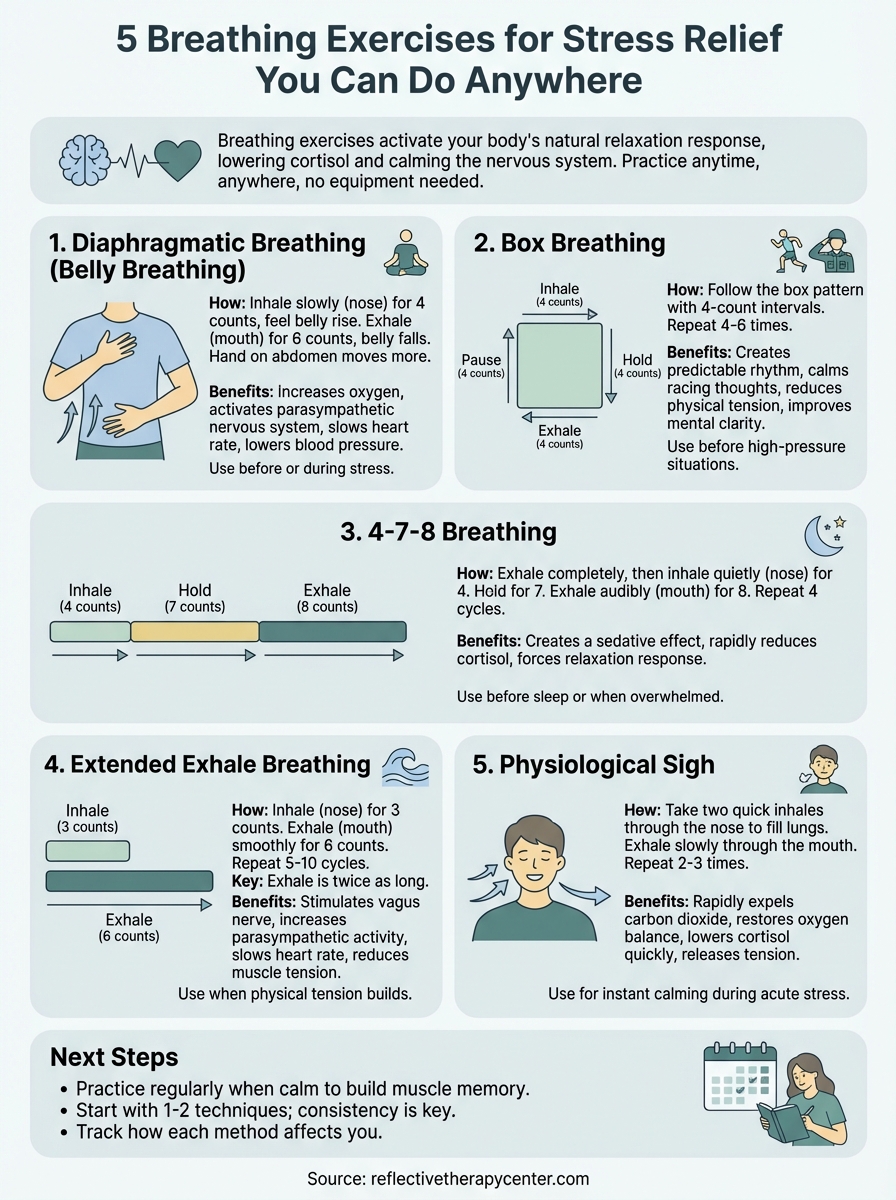
You now have five proven breathing exercises for stress that work in any situation. Each technique offers different benefits, so experiment to discover which ones fit your needs best. Practice them regularly when calm, not just during crisis moments, to build muscle memory and make them more effective when stress hits.
Start with one or two techniques this week rather than trying all five at once. Consistency matters more than variety in the beginning. Track how each method affects your body and mind so you can identify your go-to strategies for different situations.
These breathing exercises provide immediate relief, but they work best as part of a broader approach to managing stress. If anxiety continues to interfere with your daily life despite regular practice, professional support can make a significant difference. Reflective Therapy Center offers individualized therapy to help you develop comprehensive coping strategies tailored to your specific stress patterns and mental health goals.